

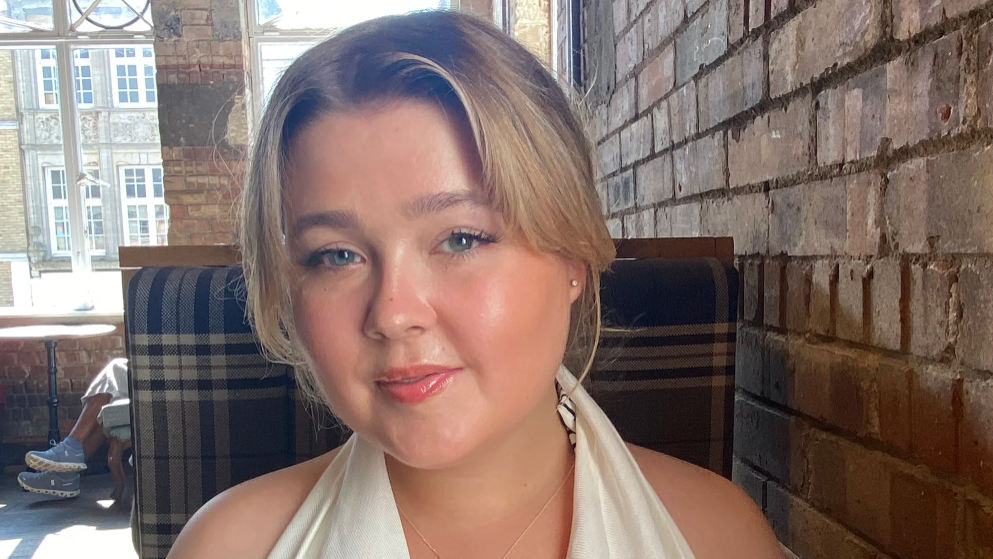
Losing my sight in childhood deeply affected my self-confidence, but makeup became my powerful ally in reclaiming it. Applying makeup is a ritual steeped in personal significance. Many children have fond memories of experimenting with their parents’ cosmetics—whether it’s swiping on a mother’s red lipstick or brushing vibrant eyeshadow onto their eyelids. In Ancient Egypt, makeup was used to appeal to the gods, with malachite eyeshadows and kohl transforming individuals into living works of art.
Today, makeup plays an integral role in how we perceive ourselves and how others perceive us. As I grew up, I admired the flawless models gracing magazine covers, their radiant skin and perfectly applied eyeliner captivating my imagination. I longed to master their artistry. My older sister was my inspiration; I used to think of her as a magician wielding her brushes like wands. I loved asking her to paint my nails bright pink or apply eyeshadow, marveling at her precision—something I struggled to replicate due to my deteriorating eyesight.
At just two years old, I was diagnosed with juvenile idiopathic arthritis (JIA), an autoimmune condition where the immune system mistakenly attacks healthy cells, causing widespread inflammation. JIA affects around 1 in 1,000 children in the UK under 16, primarily targeting joints but also potentially affecting eyes and other organs.
In my case, JIA led to chronic uveitis, resulting in persistent eye inflammation and eventual vision loss. Despite surgeries and treatments to manage the inflammation, the damage was irreversible and triggered glaucoma, increasing pressure in my eyes and permanently damaging the optic nerve—the vital connection between my brain and sight.
Through this journey, makeup has become more than just a way to enhance my appearance; it has restored a sense of control and confidence in my life.

As my vision continued to deteriorate, my relationship with makeup—and my self-image—began to falter. I often arrived at school with patches of unblended foundation and uneven lip liner, feeling frustrated and embarrassed. I craved control over my life, yet I stubbornly resisted help from my sister or mom with my beauty routine, despite my vision challenges. It felt disheartening, as if I couldn’t function like other women. I experienced a mix of frustration and fear, watching my ability to express myself through makeup slip away before I had the chance to fully embrace it.
To navigate this changing reality, I needed to learn to accept myself. I had to come to terms with the fact that I would never see the world the same way as my peers—and that it was okay. Once I began to find peace with this, I developed a new relationship with my beauty routine and discovered what truly works for me.
At 22, I am now registered blind. Contrary to common belief, blindness exists on a spectrum; it’s not just total darkness. Some people see colors and light, while others have varying degrees of vision impairment. I’ve lost most of my vision in my left eye, and my right eye has no peripheral vision, which has worsened over the years. Although my condition is currently stable, it could change at any moment.
As my vision deteriorated, my relationship with makeup—and with myself—began to falter. Yet, despite these challenges, I refuse to let my disability stifle my determination. From fundraising for charities to graduating from university and pursuing a career as a writer, I want to show that no matter what life throws our way, we all have the power to define who we want to be.
Today, I revel in my beauty rituals just like anyone else. I’ve learned the contours of my face—from the width of my cheekbones to the shape of my brows. I’ve abandoned blending tools for my fingers and brushes, fully embracing my sense of touch. In fact, I can now apply my makeup with my eyes closed! So skilled have I become that my sighted friends often ask for my tips.
Here are some key lessons I’ve learned that might work for you, too:
1. Stick with a Sheer Base
My skin is generally clear and free from texture, so I don’t invest in heavy coverage products. In the past, I wasted money on full-coverage foundations that highlighted any spots I missed. Now, I prefer sheer or buildable coverage. Some of my favorites include Charlotte Tilbury’s Hollywood Flawless Filter and Dior’s Forever Skin Perfect Stick.
2. Smoky Eyes ‘Til I Die
I used to shy away from eye makeup due to my lack of precision. However, experimenting with smoky eyes liberated me to play with different styles without the stress of perfecting a cut crease or winged liner. A softly smudged smoky eye subtly enhances my unique eye colors—one green and one blue—especially when I use a plum kohl liner.
3. Choose Cream Over Powder Products
I’ve switched from powder blushes and highlighters to cream products, which give me a better sense of where and how much product I’m applying. With powders, I often applied too much without realizing it. Creams allow me to achieve a natural look, and if I overdo it, they’re easier to blend out.
4. Embrace Your Face
The most valuable lesson I’ve learned through makeup is the importance of self-acceptance. In a world obsessed with perfection, it’s easy to fall into the trap of comparison. Remember, you are unique, and your essence is irreplaceable.
Though my sister and I no longer live together, we still bond over our shared love of makeup. I’ve memorized the contours of her face and sometimes apply her makeup, discussing the latest products and seeking her opinion on new looks. The difference now is that I no longer feel disappointed when things don’t turn out perfectly. We’re all human, and beauty often lies in what we perceive as flaws. So, embrace your features—they are what make you uniquely you.







Leave a comment