

London Fashion Week marked its 40th anniversary last week, providing a moment for reflection against a backdrop of economic uncertainty for many brands. Jonathan Anderson, who has showcased his eponymous label JW Anderson for 15 years, described the current phase as “transitory.” He noted that challenging times could lead to a renewed focus on the core purpose of fashion weeks: “The economic climate might help us rethink why we have fashion weeks and what they represent,” he remarked during a post-show interview.
While Anderson confirmed his commitment to London, the event has seen a shift in its lineup. Notably, several designers, including Victoria Beckham and cult favorite Dilara Findikoglu, have opted to present their collections elsewhere. Some former mainstays, like Christopher Kane and American designer Halpern, have closed their doors, while others, like Molly Goddard and Rejina Pyo, have been absent from the schedule since early 2022. David Koma also withdrew weeks prior to the event, choosing to focus on marketing campaigns instead.
On a brighter note, there were significant comebacks. S.S. Daley, the youngest designer on the schedule and recent recipient of the Queen Elizabeth II Prize, returned to London with a star-studded front row, including Harry Styles, Anna Wintour, and Emma Corrin. Similarly, Nensi Dojaka, the 2021 LVMH Prize winner, rejoined the lineup after an 18-month hiatus. Carly Marks, known for her avant-garde New York label Puppets and Puppets, also chose London for her presentation this season.
Burberry, the largest brand on the schedule, faced scrutiny as it contends with declining profits. Creative director Daniel Lee’s show, set in the lobby of the National Theatre, aimed to shift the brand’s narrative and reignite consumer interest. While it’s too soon to assess the impact, the more refined showcase hinted at a move away from elaborate designs towards a more sophisticated and commercially viable approach.
This season, many shows took place in iconic London venues, with presentations hosted at the Old Bailey courthouse, the Royal Academy, the British Museum’s courtyard, and Arsenal’s Emirates Stadium. Smaller brands opted for intimate presentations, highlighting that sometimes, less is more. Designers like Talia Byre, Sinead O’Dwyer, Ancuta Sarca, and Puppets and Puppets embraced this philosophy, with Paolo Carzana showcasing his theatrical collection in his East London garden.
Overall, the five-day event unveiled a number of strong collections for the Spring-Summer 2025 season, particularly from Simone Rocha, Aaron Esh, and Richard Quinn, reinforcing London’s status as a leading creative capital as it celebrates 40 years of fashion innovation.
A spectrum of sexy
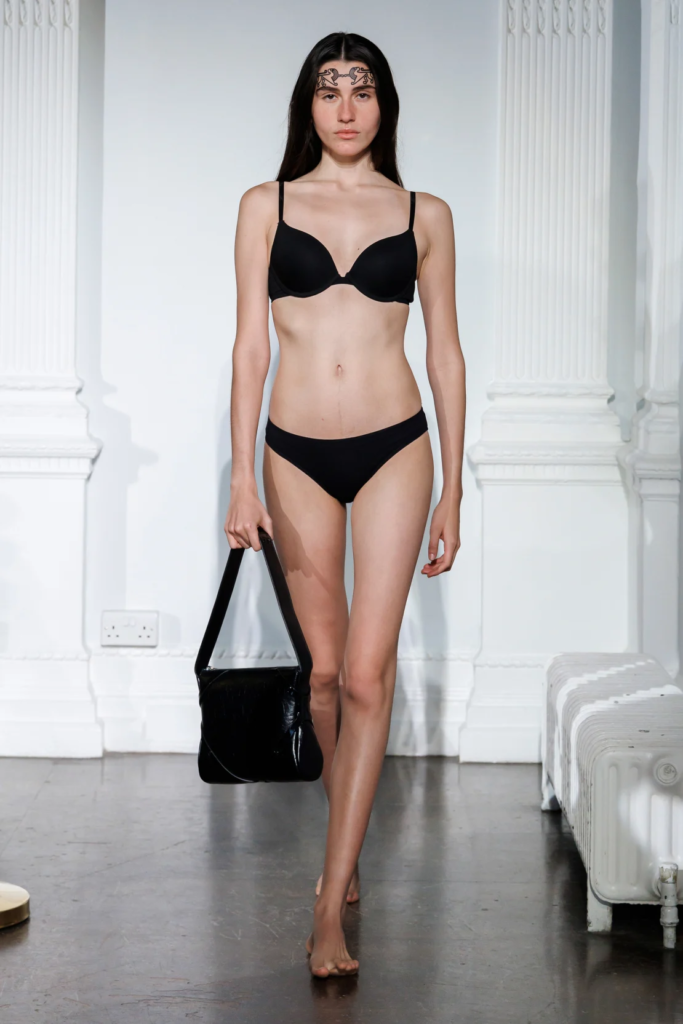
Designers this season have posed the question of what constitutes sexiness, offering a diverse array of interpretations. At Puppets and Puppets, the runway showcased overt nudity, with stripped-back styling that allowed the accessories to take center stage. Di Petsa presented Adonis-like physiques, featuring looks that highlighted metallic nipple pasties as focal points.
At 16 Arlington, the use of sheer fabrics and intricately beaded designs revealed models in bikini tops paired with glittering or animal-print hotpants. Simone Rocha explored the mini skirt through oversized tutus and sleek satin slips, while Nensi Dojaka pushed the envelope by infusing even evening gowns with a lingerie aesthetic.
However, sensuality extended beyond skin exposure. Designers like Aaron Esh introduced a more refined sex appeal, featuring slim-cut leather trousers, heeled ankle boots, and sheer blouses. Models exuded an air of effortless allure, complemented by oversized sunglasses and baseball caps, delivering the ultimate sexy statement: simplicity and ease.
Redefining ‘Girly’
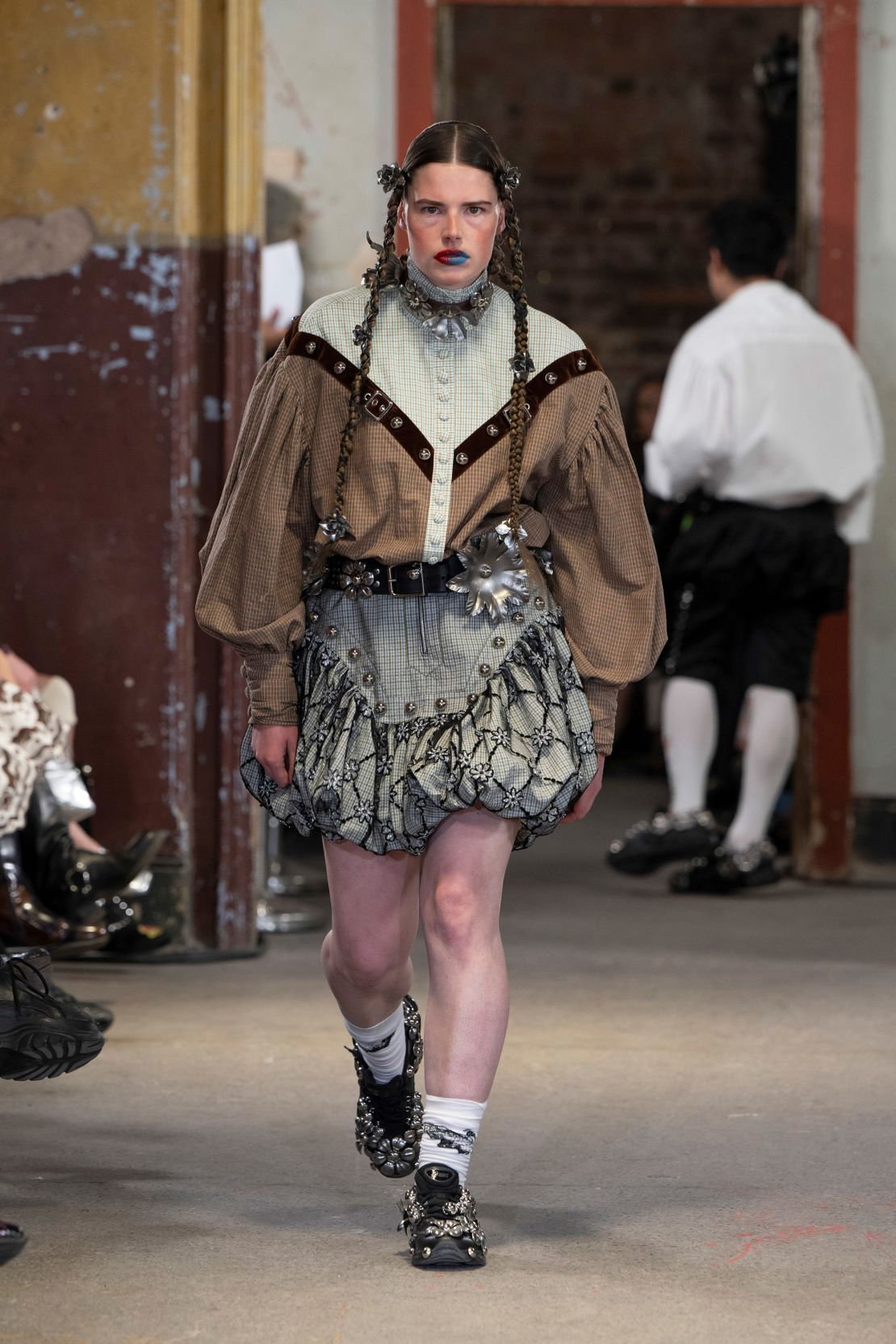
The pioneer women of frontier America were a source of inspiration for Chopova Lowena — leaning into western wear with denim,
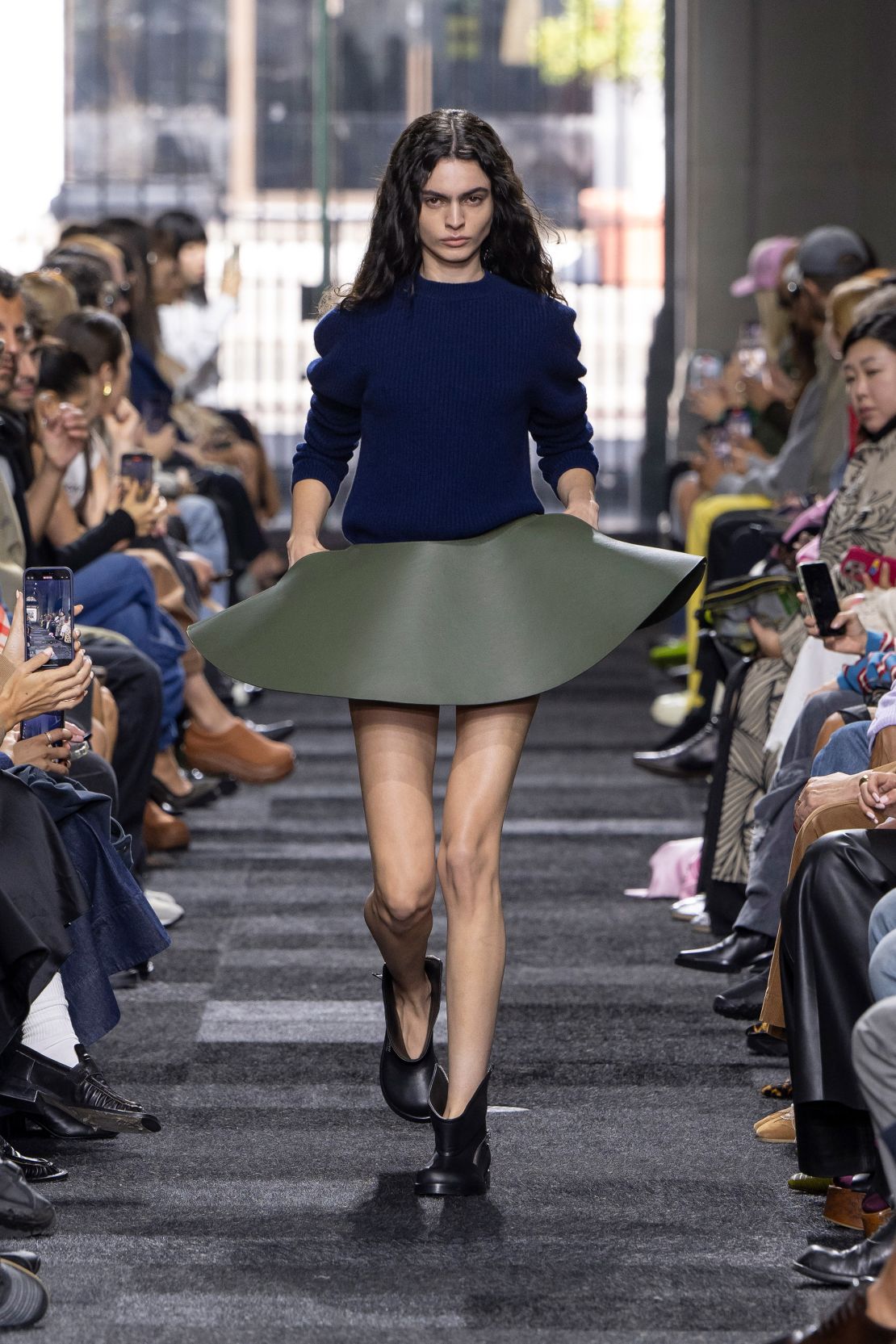
In leather, tutus were given a tougher edge at JW Anderson. JW Anderson
Girliness has been all the rage this summer as it has taken on a new, more nuanced definition. Reframed as an attitude with many layers and contradictions, girl power has permeated widely throughout culture — from displays of female solidarity at the Olympics (the image of Simone Biles and Jordan Biles bowing down to gold medal winner Rebecca Andrade during their podium presentation, a prime example), to Vice President Kamala Harris’ campaign to become America’s first woman commander in chief.
As is often the case, the trend has seemingly influenced designers too. At the JW Anderson show, where tutus were made of leather, Anderson referenced his sister who, he said, “can get quite girly sometimes, but there’s a toughness, a kind of ownership … I can’t relate but I like the attitude.”
Femininity was both celebrated and challenged at Erdem where the brand’s founder and creative director Erdem Moralıoğlu’s new collection was inspired by queer novel “The Well of Loneliness,” which, for its telling of a love story between two women, was promptly banned after it was first published in 1928. The book’s author, Marguerite Antonia Radclyffe Hall, a lesbian, preferred to go by the name John and often wore men’s clothing. Moralıoğlu’s new designs blended hyper-feminine dress codes, such as lace slip dresses, with sharp Savile Row suiting. Similarly, Chopova Lowena, took its cues from “ferocious feminine muses of America’s past.” Denim, studs and boots with spurs were thrown against ruffles, bloomers, voluminous miniskirts and embroidered flowers.
Let the games begin, again
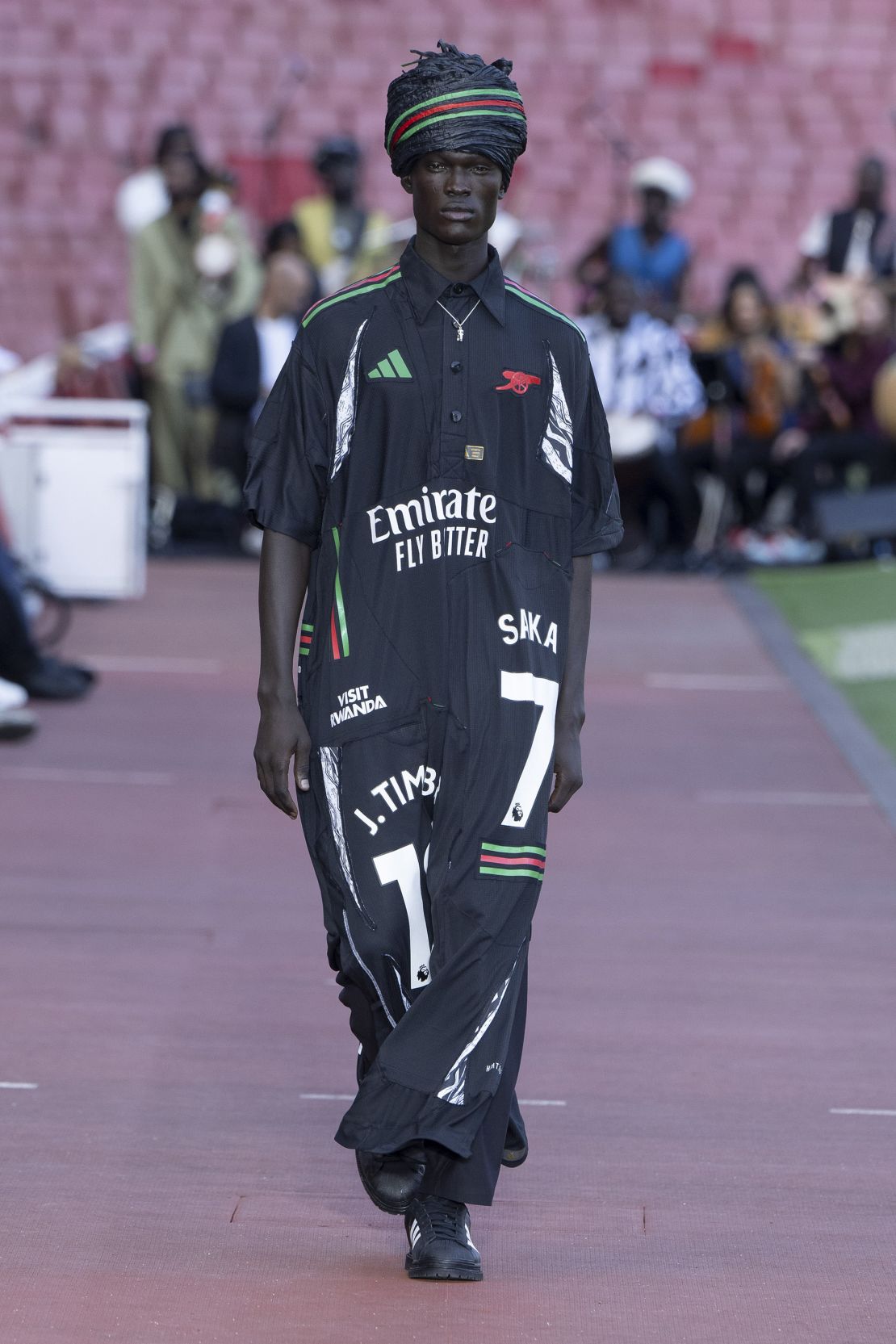
Labrum staged its show at Emirates Stadium. Victor Virgile/Gamma-Rapho/Getty Images
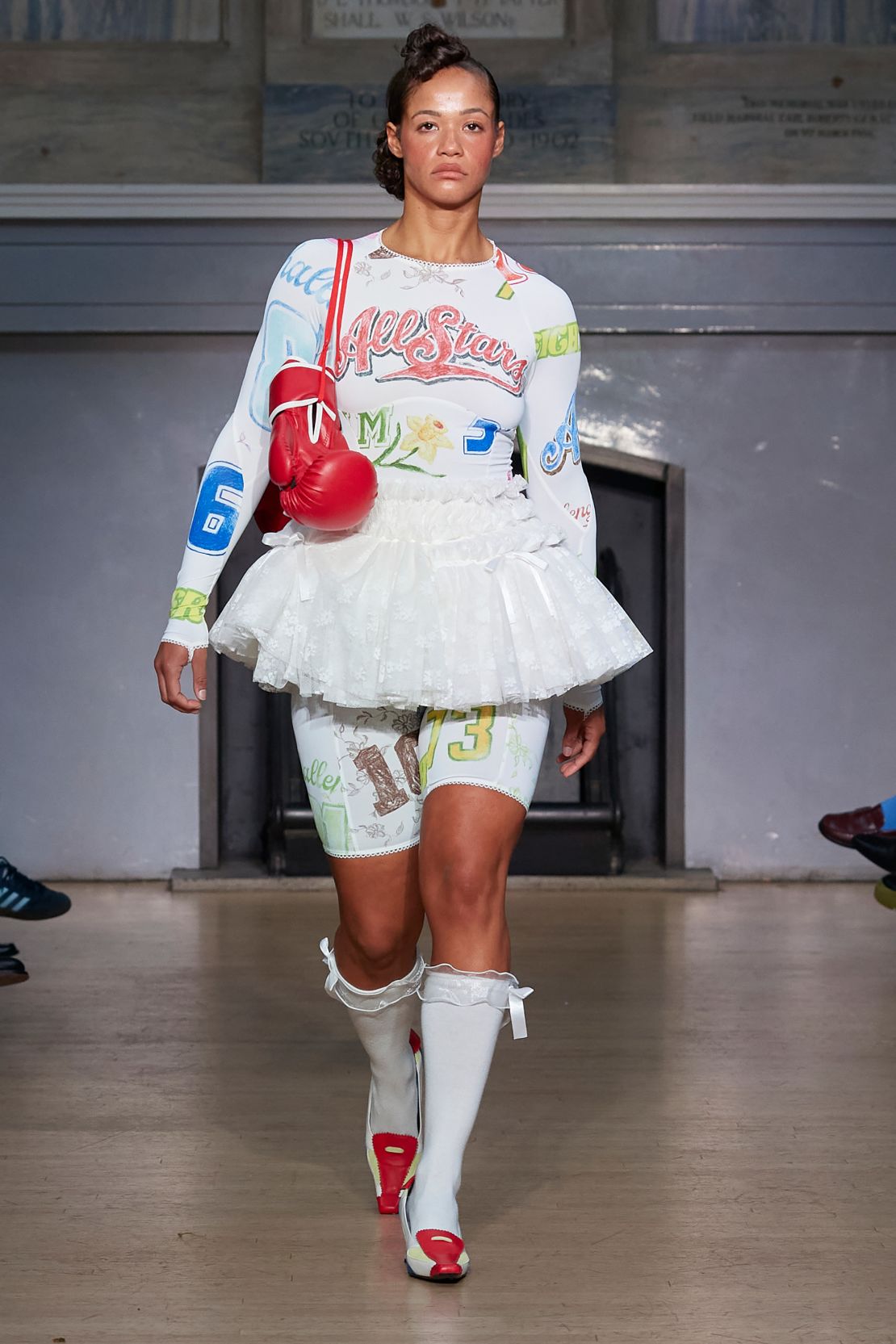
Yuhan Wang was inspired by female boxers. Olu Ogunshakin/Chris Yates Media
Call it the Olympic effect, but this season some London designers looked at sportswear through a new lens. Talia Byre’s sparkling lamé rugby shirts and shorts in raspberry and champagne hues reimagined the classic British kit as a partywear; while Labrum staged its show inside Emirates Stadium, not only reprinting Arsenal soccer shirts to include the red, green and white colors of the Pan-African flag — but reworking the jerseys entirely to create a matching two-piece set.
Yuhan Wang dedicated her collection to the world of female boxing, particularly athletes such as Alaia Ali, Jane Couch and Bridget Riley. On display were cycling shorts made entirely of lace, NFL-style shoulder pads adorned with embroidered flowers and, of course, several pairs of boxing gloves. Speaking to after the show, Wang said she wanted to reimagine the meaning of sportswear. “I think in the past sportswear has been based on men. It’s quite functional. But no one thinks about how women want to dress,” she said. “I’m trying to recreate sportswear in a more feminine way.”
All grown up
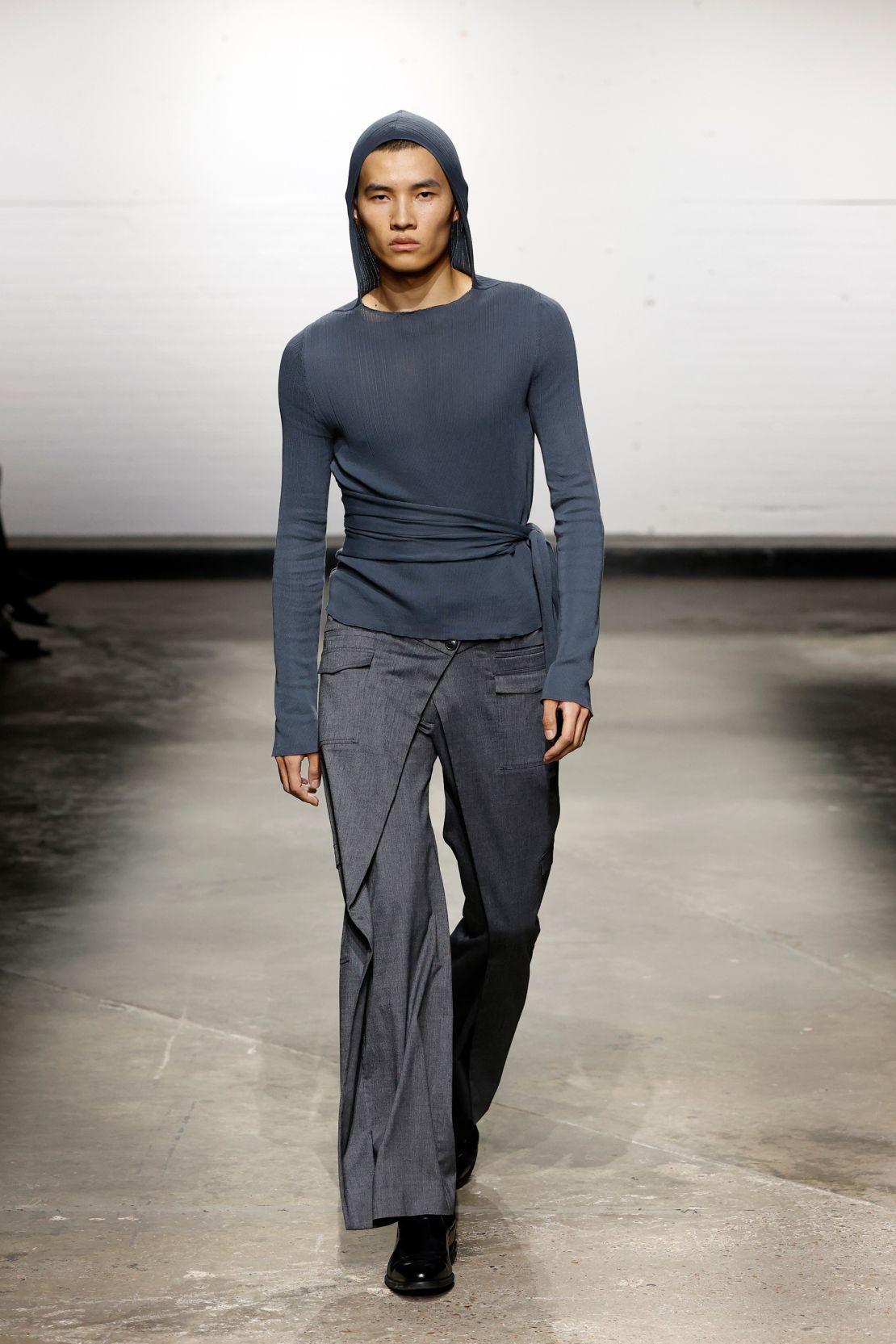
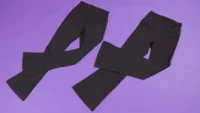
A pair of wrap around suit trousers were a fresh reinvention of corporate work wear. John Phillips/Getty Images
London has long been known as a free-spirited training ground for fashion’s best and brightest. From Alexander McQueen and Vivienne Westwood to John Galliano and Stella McCartney, the city has a knack for nurturing emerging talent until they reach their full potential. But this season, a sartorial maturity — perhaps driven by economic pragmatism — eclipsed London’s legacy as the industry’s scrappiest fashion capital.
What stole the show at Chet Lo wasn’t an eye-catching array of quirky accessories in candy-colored hues, but a pair of expertly engineered wrap trousers in chocolate brown and stone-gray fabric. Nensi Dojaka bolstered her reputation as lingerie luminary with a business-savvy partnership with Calvin Klein. Relative newcomer Standing Ground’s red carpet-ready gowns were met with critical praise. Even Richard Quinn, known for his subversive fusion of regal silhouettes, classical florals and fetish wear, remained purist. Staged at The Dorchester Hotel, where Hubert de Givenchy held his first UK show in 1955, the collection felt like peeking into a 1950’s debutante’s wardrobe.
To see the best bits of London Fashion Week, keep scrolling.
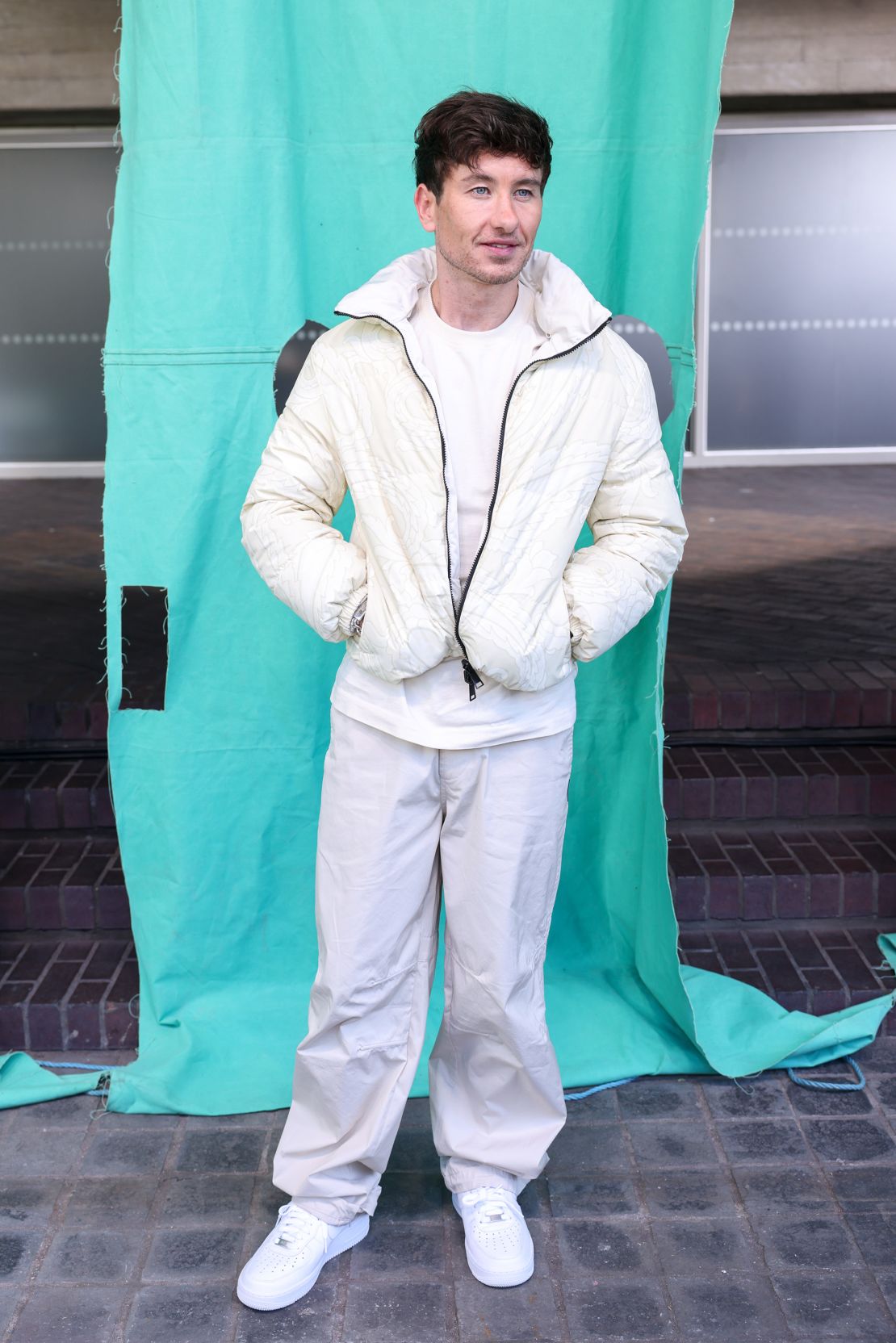
Barry Keoghan at Burberry. Dave Benett/Getty Images for Burberry
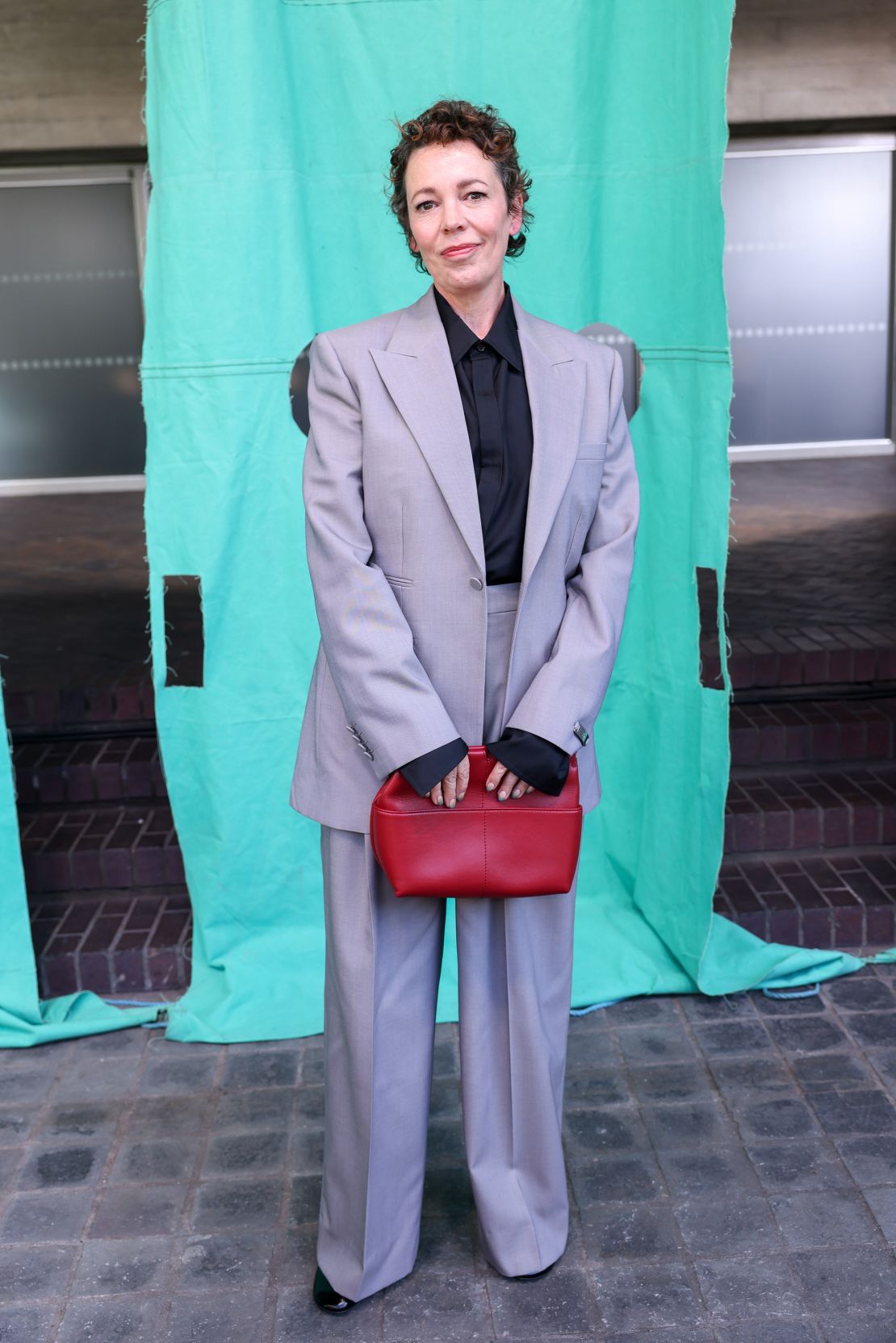
Olivia Colman at Burberry. Dave Benett/Getty Images for Burberry
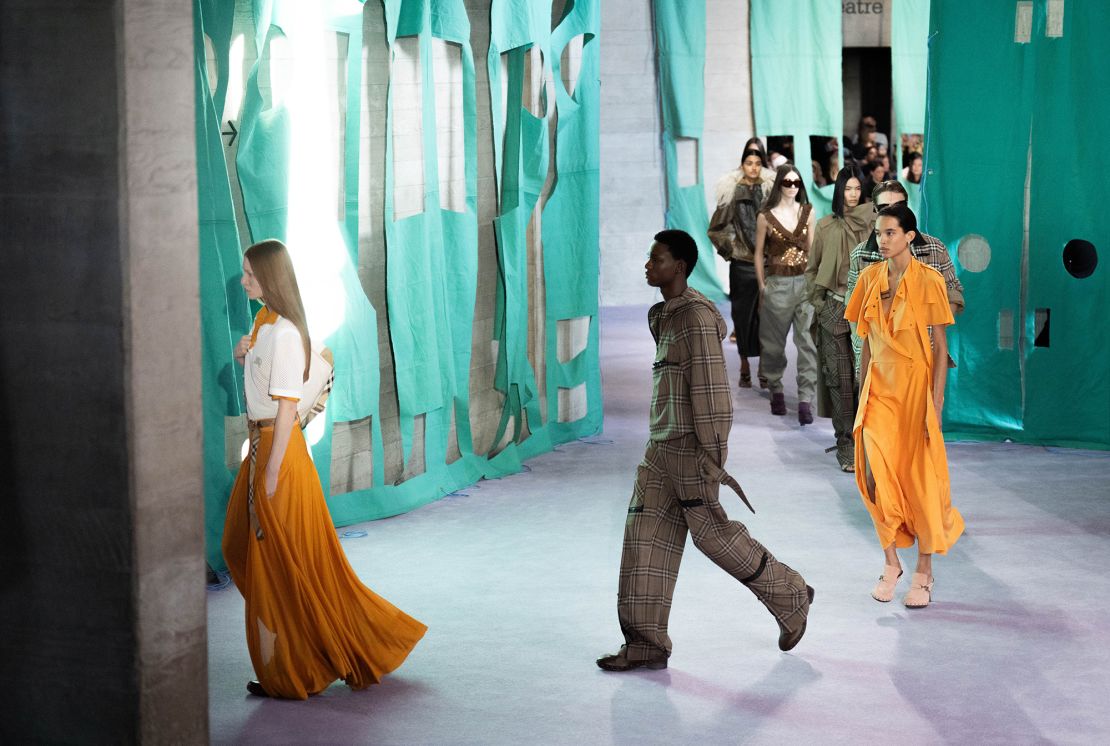
Burberry drew on their trademark check print and reimagined the trench coat as tops and dresses.
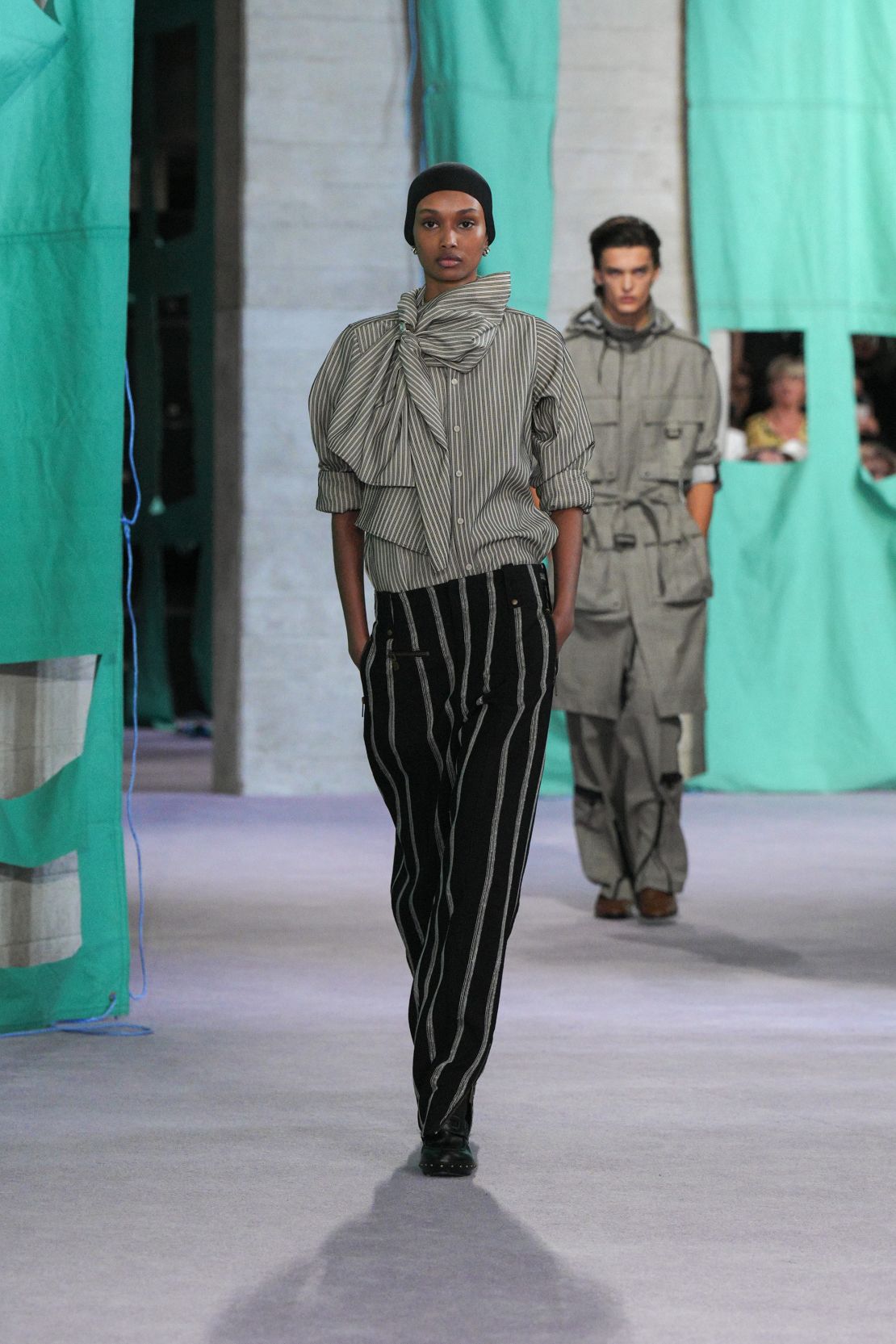
The collection felt more commercially driven with a number of wearable pieces. Isidore Montag/Gorunway.com
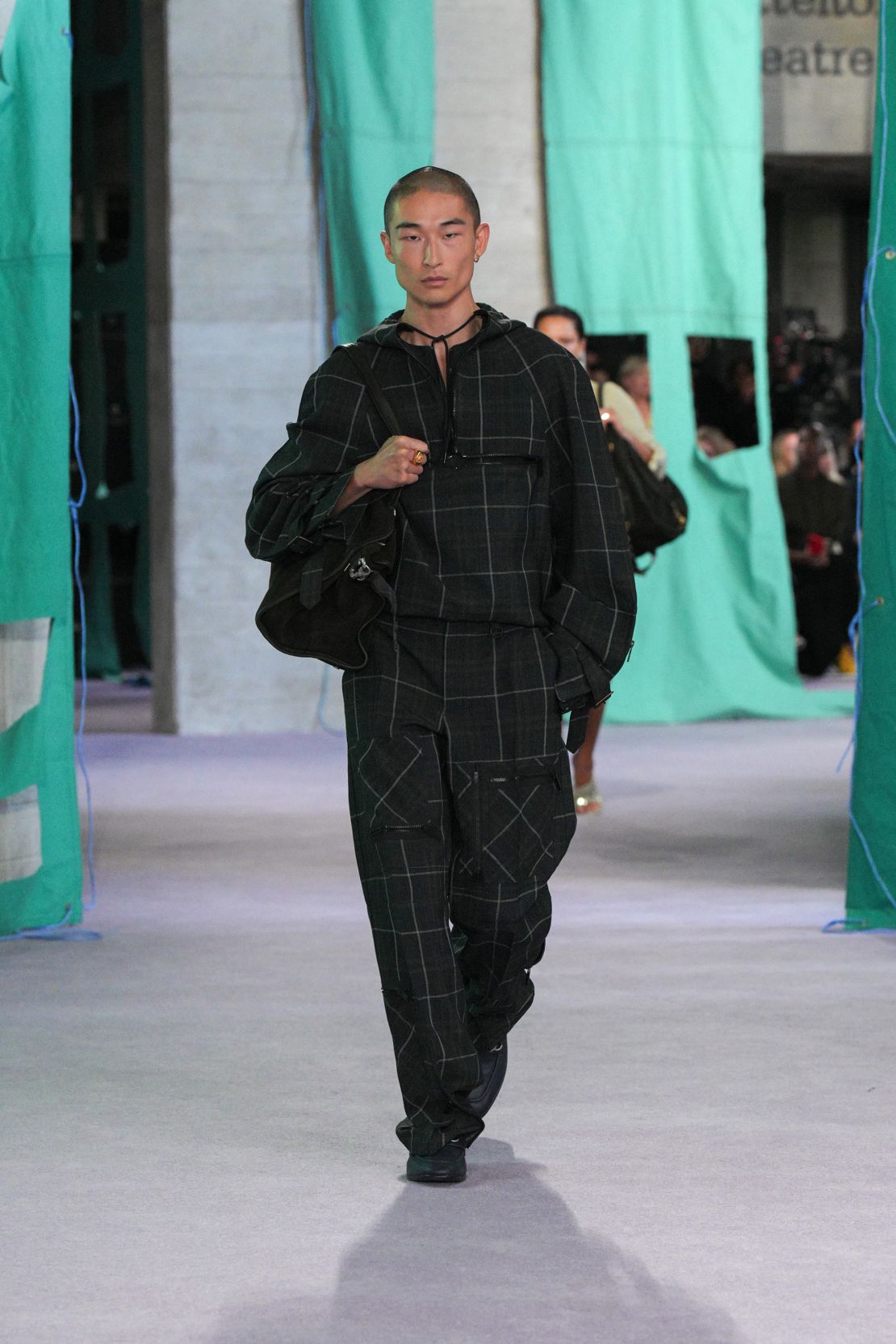
An sophisticated street style threaded through Daniel Lee’s new designs. Isidore Montag/Gorunway.com
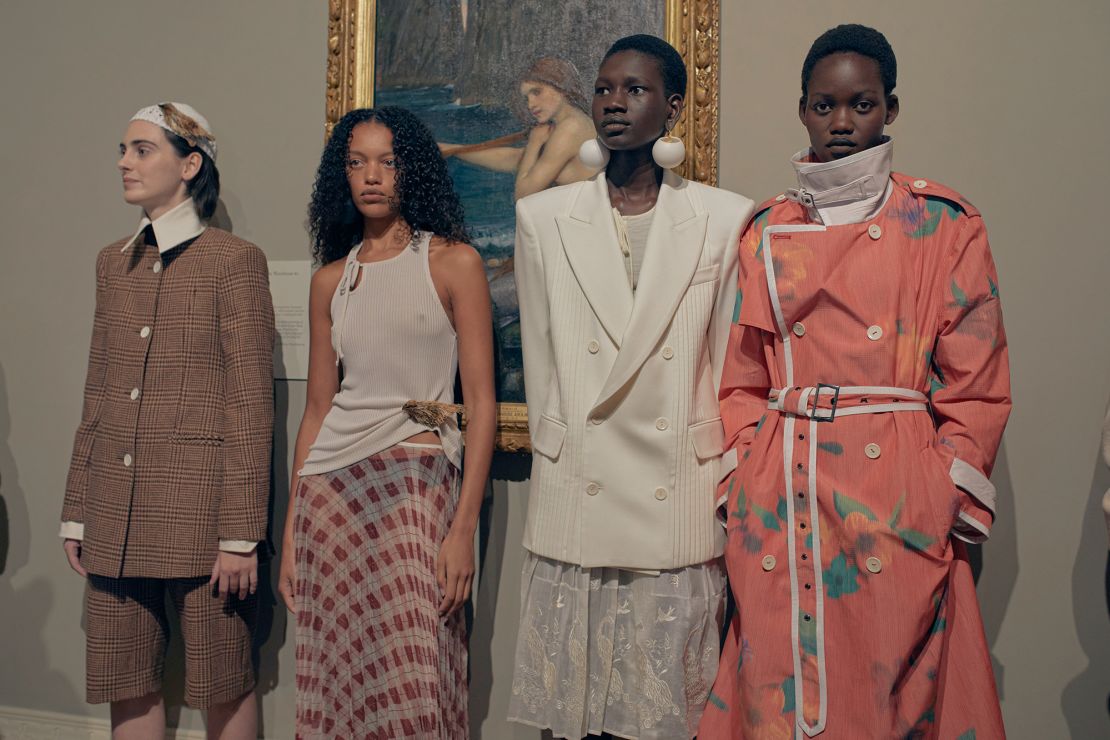
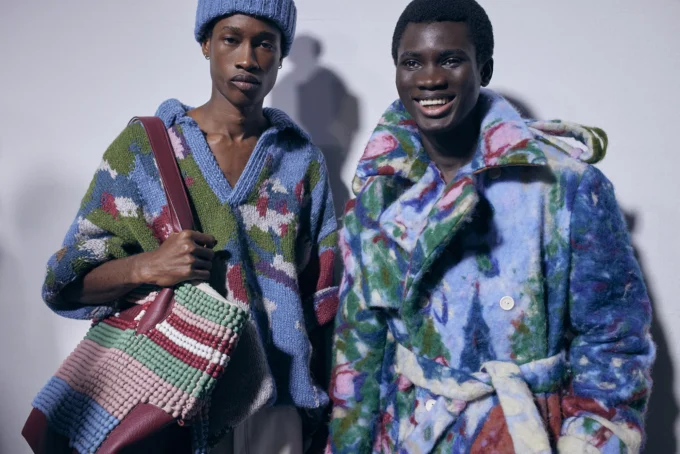
25-year-old designer Steven Stokey-Daley debuted womenswear. Francisco Gomez de Villaboa/WWD/Getty Images
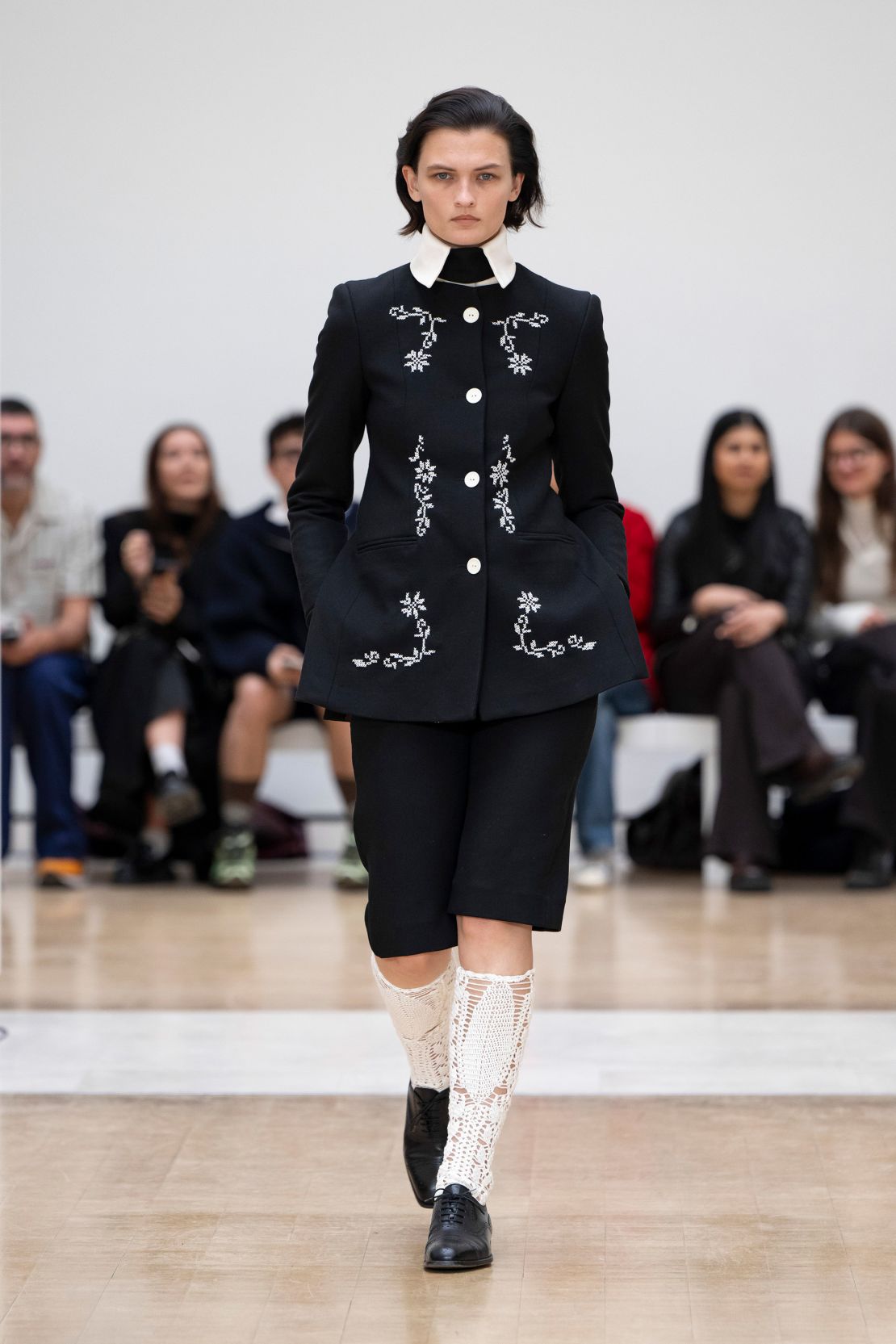
There was a spectrum of womanhood on offer, from eccentric embroidered tailoring to ’70s style corduroy suiting. Cris Fragkou
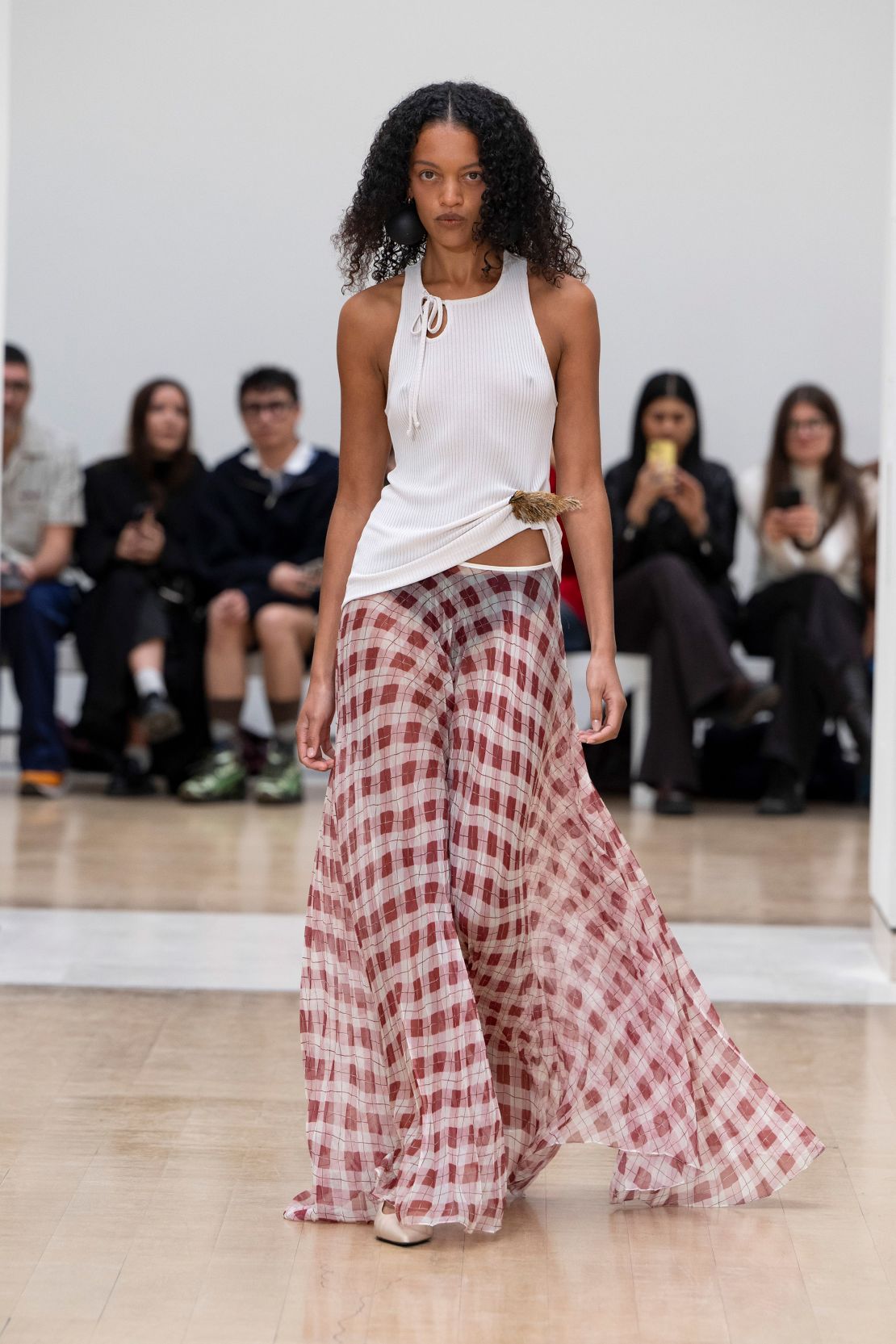
SS Daley was awarded the Queen Elizabeth II prize this season. Cris Fragkou



Leave a comment