

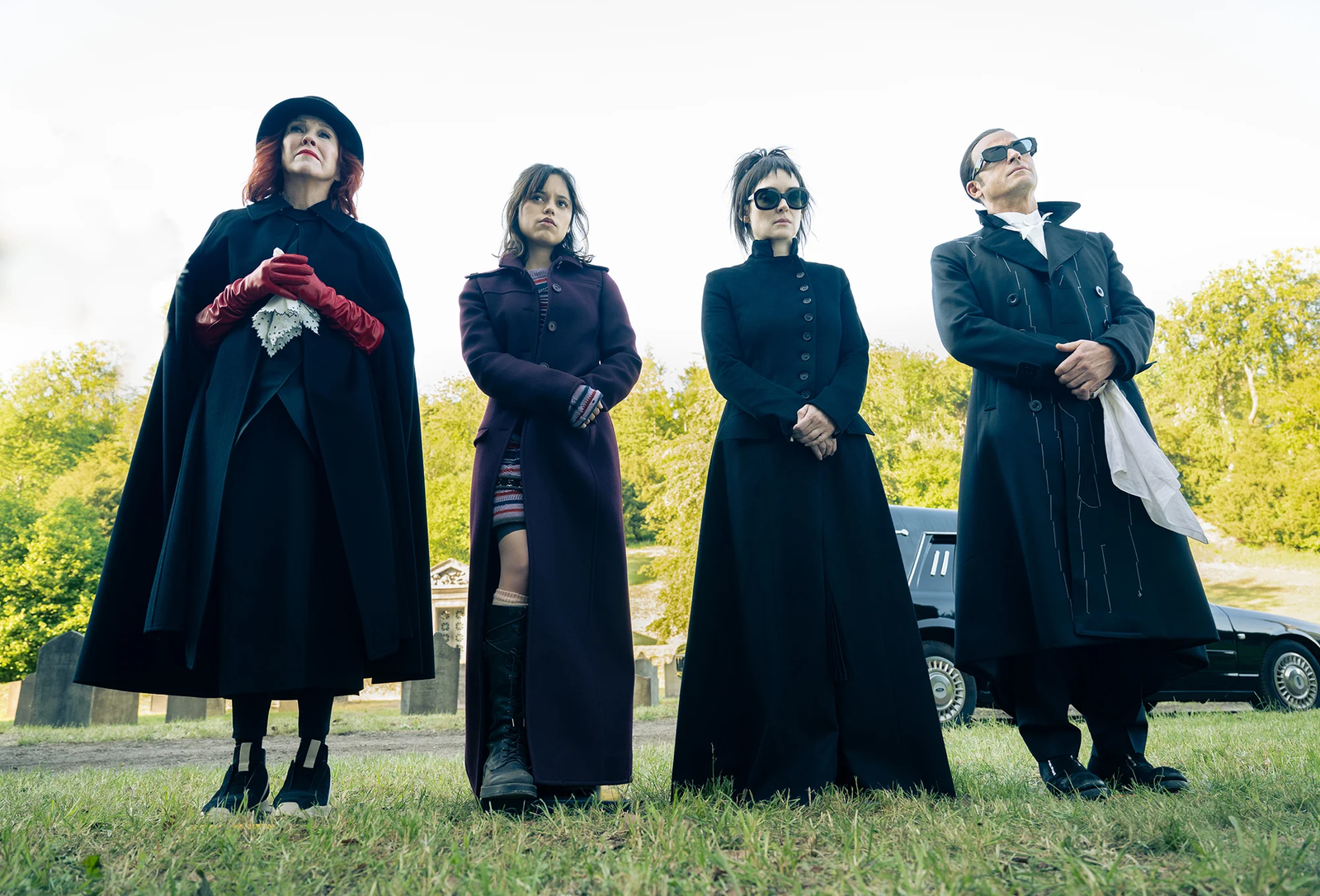
Over 35 years after Tim Burton’s iconic “Beetlejuice,” Michael Keaton is back in his unforgettable striped suit, joined by original castmates Winona Ryder and Catherine O’Hara, along with newcomer Jenna Ortega. The film’s legendary costumes, designed by Aggie Guerard Rodgers, have become staples in the Halloween costume canon, with Lydia Deetz’s striking red tulle wedding dress often cited as a quintessential choice for October festivities. Notably, Bella Hadid famously donned a recreation of this gown in 2018, perfectly complemented by The Weeknd’s homage to Keaton’s burgundy tuxedo.
In the recent remake, released earlier this month, costume designer Colleen Atwood faced the challenge of honoring the film’s storied fashion legacy while introducing fresh elements. Speaking from Dublin, Atwood shared her insights into the design process, highlighting her approach to merging nostalgia with innovation.
Influences on the Costume Design
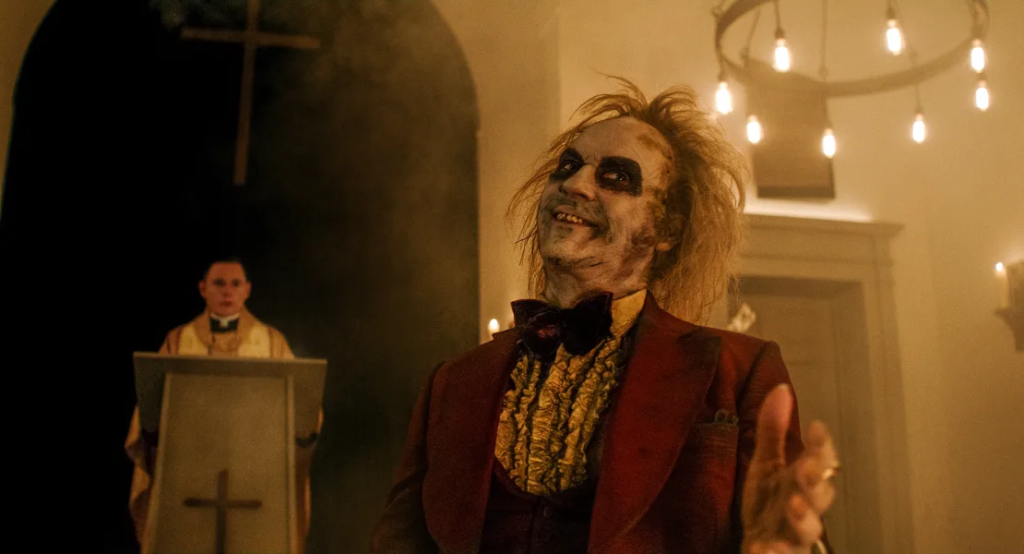
Atwood explained that the underworld scenes drew heavily from the 1970s aesthetic, utilizing a color palette that complemented the ghostly characters. “We have people painted all different colors, so I wanted hues that wouldn’t overwhelm their blue faces,” she noted. The result was a carefully curated blend of styles from various decades, creating a unique atmosphere in the afterlife.
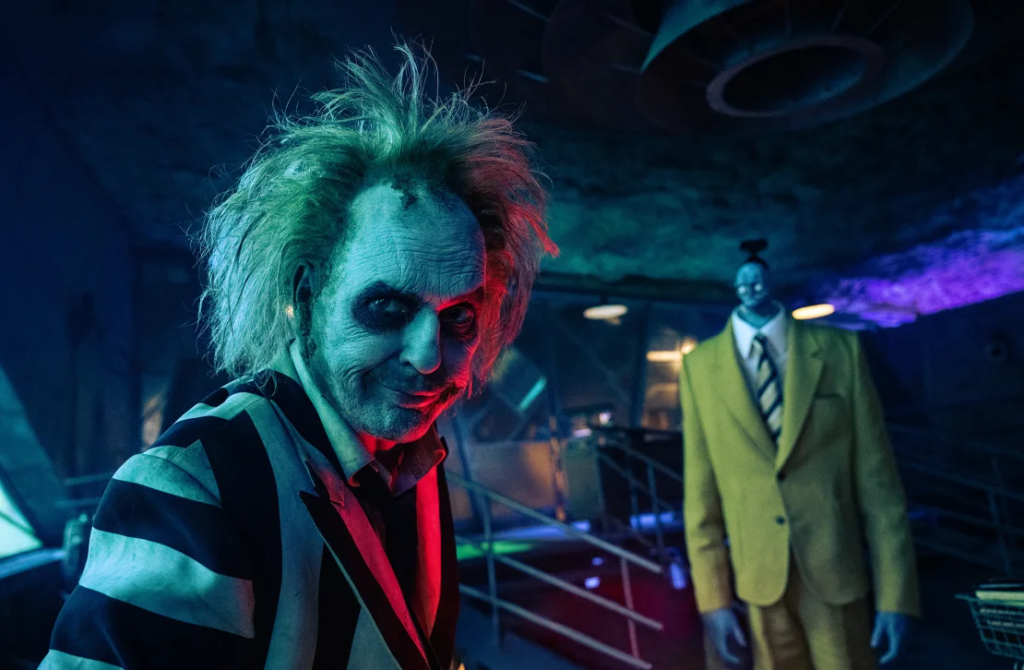
Particularly striking were “the Bob’s,” the shrinkers (or zombies) of the underworld, whose gold suits were inspired by the classic attire of Century 21 Real Estate agents from the 1980s. Atwood’s meticulous research and creativity aimed to capture the essence of these characters while making them distinctly her own.
Reimagining Iconic Looks
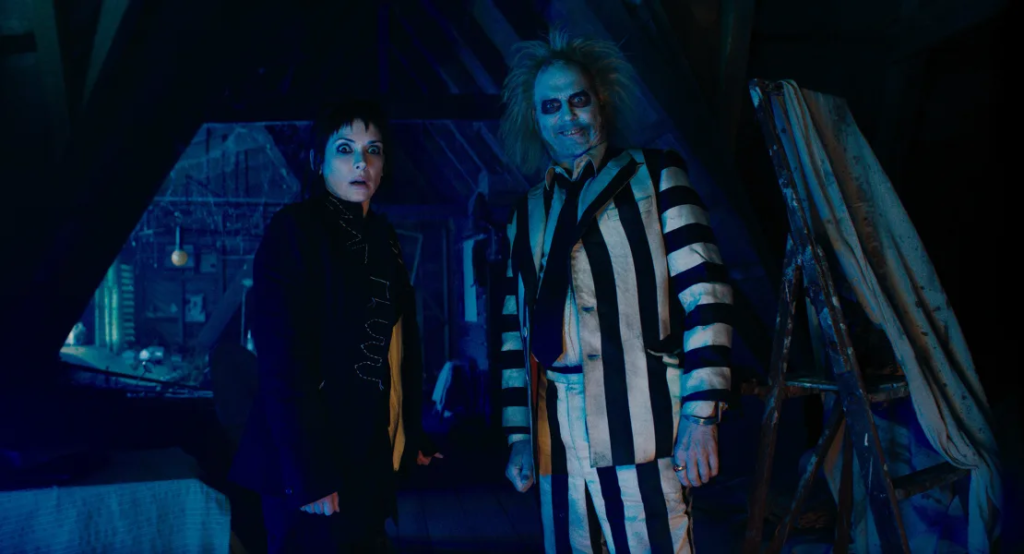
When it came to Beetlejuice’s signature striped suit, Atwood approached it with respect for the original while ensuring a modern twist. “He’s an older, more worn Beetlejuice now, so I aged the suit to reflect that,” she explained. The updated design used softer, more organic materials, allowing for a refined look that signaled the passage of time.
The wedding tuxedo also received a thoughtful redesign, embodying the feel of a rented tux while boasting a tailored fit. “We wanted to honor Aggie Rodgers’ original work while still creating something fresh for today’s audience,” Atwood said.
The Aging Process
Atwood described the intricate aging process that the costumes underwent. Each piece was treated with liquid dye to achieve a slightly dirty appearance, mimicking years of wear. Techniques included painting edges with green, mildewy tones and distressing cuffs to give a sense of character and history.
When discussing the original wedding tux from the archives, Atwood remarked, “It was just a standard off-the-rack tux—nothing extraordinary.” This allowed her to focus on creating a new design without being constrained by the original.
Lydia’s Wedding Dress
Atwood’s vision for Lydia’s wedding dress began with a Victorian silhouette. She sourced exquisite lace from France, aiming to make the gown lighter and more ethereal than its predecessor. This new approach offered a fresh perspective while retaining the spirit of the original.
Crafting a Unique Aesthetic
Atwood relished the opportunity to blend vintage elements with contemporary fashion, creating a distinctive world for “Beetlejuice Beetlejuice.” “The joy of this project was mixing different time periods and watching how they could coexist aesthetically,” she said. This innovative approach has ensured that the new film pays homage to its roots while offering a visually stunning experience for modern audiences.




Leave a comment