

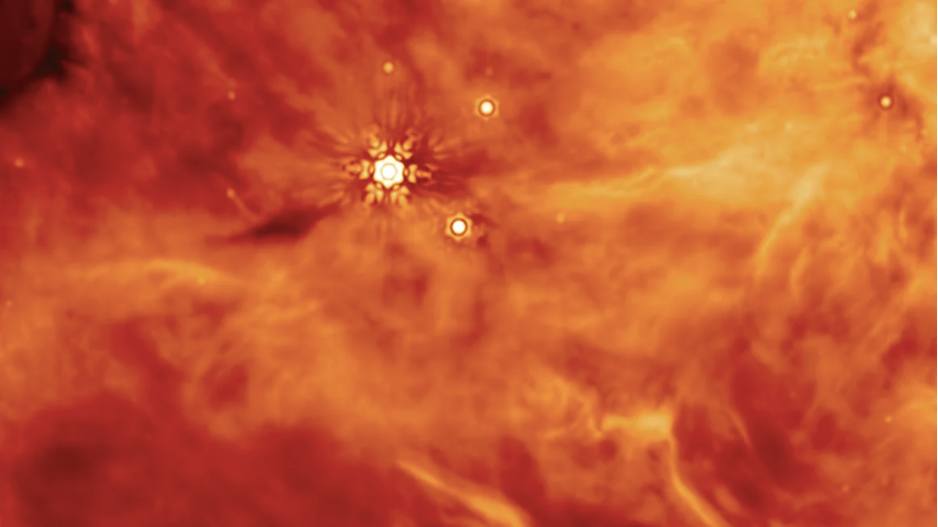
In a groundbreaking discovery, astronomers utilizing the James Webb Space Telescope have identified familiar chemical compounds reminiscent of everyday substances such as vinegar, ant stings, and even margaritas, orbiting around two young stars, as reported by NASA.
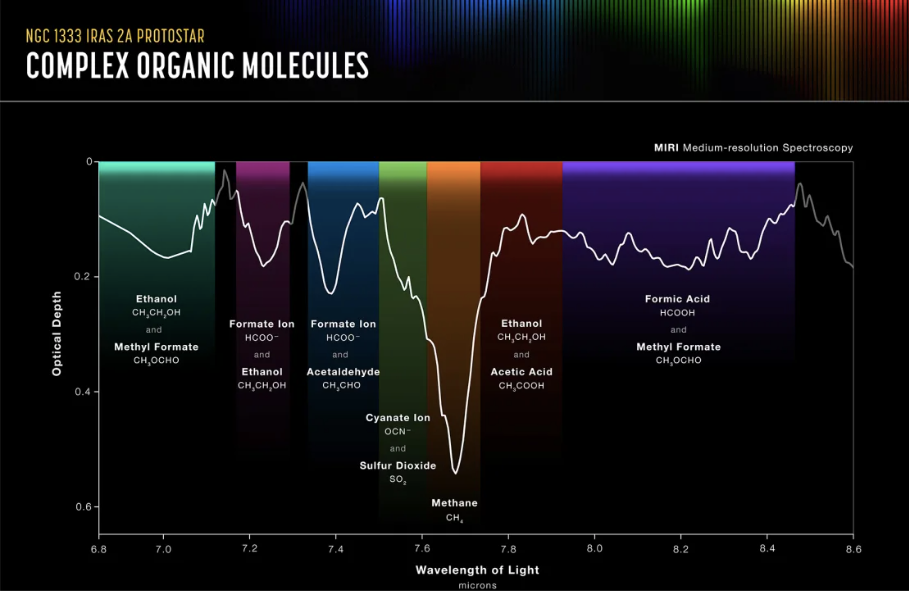
Using the Mid-Infrared Instrument of the space observatory, researchers detected complex organic molecules including acetic acid, a primary component of vinegar, and ethanol, commonly known as alcohol. Additionally, they observed simple molecules like formic acid, responsible for the stinging sensation caused by ant bites, as well as sulfur dioxide, methane, and formaldehyde. These findings shed light on the diverse chemical makeup present in the cosmos.
The two protostars, IRAS 2A and IRAS 23385, around which these molecules were discovered, are still in the early stages of their formation, lacking the development of planets. Protostars emerge from swirling clouds of gas and dust, with leftover materials contributing to the formation of planets over time.
Of particular interest is the potential role of these detected molecules in the creation of habitable worlds. Astronomers speculate that the incorporation of such ingredients into future planets could lay the groundwork for the emergence of life. Notably, sulfur dioxide, a sulfurous compound found in the observations, is believed to have played a crucial role in Earth’s early history, contributing to conditions conducive to life.
The discovery underscores the interconnectedness of celestial bodies and the cosmos, with heavy metals and chemical elements originating from stellar explosions gradually becoming integrated into the formation of stars and planets. This intricate process highlights the fundamental role of cosmic chemistry in shaping the universe as we know it.
As renowned astronomer Carl Sagan famously stated, “We are made of star-stuff,” emphasizing the profound connection between humanity and the cosmos. The revelation of familiar chemical compounds around young stars offers valuable insights into the prevalence of life-sustaining elements across the universe, fueling further exploration and discovery in the field of astrochemistry.
Exploring the Cosmos: Unraveling the Mystery of Complex Molecules in Space
In a remarkable breakthrough, researchers utilizing the James Webb Space Telescope have made significant strides in the search for complex molecules within the vast expanse of space. Previous observations by the Webb telescope unveiled various types of ice compositions within cold, dark molecular clouds – regions where hydrogen and carbon monoxide molecules coalesce, eventually giving rise to protostars through gravitational collapse.
The detection of complex organic molecules (COMs) in these interstellar environments holds profound implications for our understanding of cosmic chemistry and the formation of habitable worlds. These findings shed light on the origins of these intricate molecular structures, offering insights into their role in shaping the cosmos.
According to Will Rocha, team leader of the James Webb Observations of Young ProtoStars program and a postdoctoral researcher at Leiden University, the discovery of COMs in ice provides compelling evidence for solid-phase chemical reactions occurring on the surfaces of cold dust grains. This mechanism, known as sublimation, involves the transition of solid ice directly into gas, a process believed to give rise to complex molecular formations in space.
Published in the journal Astronomy & Astrophysics, the study detailing these groundbreaking protostar findings marks a significant milestone in astrochemistry research. By unraveling the complex molecular compositions present in space, scientists aim to decipher the mechanisms by which these molecules become integrated into planetary bodies.
Moreover, the chemicals identified around protostars offer a glimpse into the early stages of our solar system’s evolution. As these complex organic molecules are believed to play a pivotal role in the formation of comets, asteroids, and eventually, planetary systems, understanding their composition provides valuable insights into the origins of life-sustaining elements.
Ewine van Dishoeck, professor of molecular astrophysics at Leiden University and coauthor of the study, underscores the significance of these findings in tracing the astrochemical evolution of our universe. She emphasizes the crucial role of continued research utilizing the James Webb Space Telescope to unravel the intricate pathways through which complex molecules shape cosmic environments.
The dedication of this research to the late Harold Linnartz, a distinguished figure in the field of astrochemistry, underscores the profound impact of his contributions to the advancement of scientific knowledge. Linnartz’s visionary work paved the way for groundbreaking discoveries in understanding the molecular complexities of space, leaving an indelible mark on the field of astronomy.
As we delve deeper into the mysteries of the cosmos, each revelation brings us closer to unlocking the secrets of our celestial origins. With the James Webb Space Telescope at the forefront of astronomical exploration, the journey to unraveling the enigma of complex molecules in space continues, promising new insights into the fundamental nature of our universe.













Leave a comment